
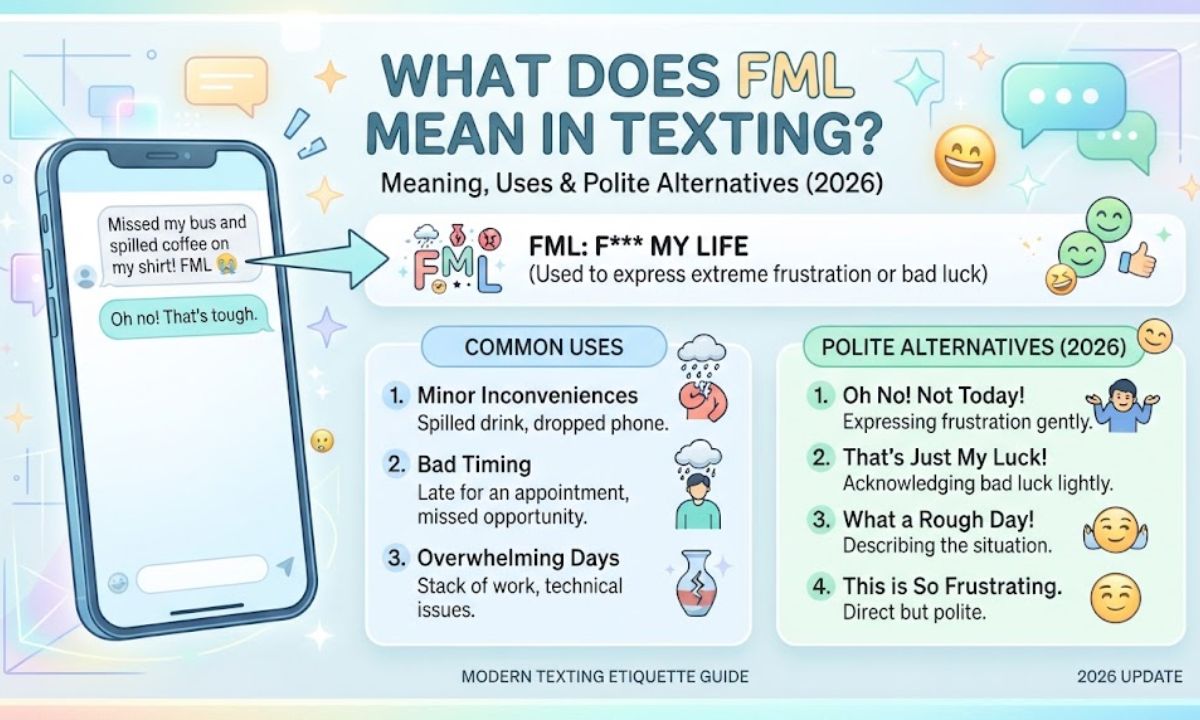

If you’ve seen “FML” pop up in a text, a caption, or a comment section and wondered what it really means, you’re not the only one. It’s one of the most common — and most misunderstood — pieces of internet slang out there. This guide breaks down what FML actually means, why people use it, when it can backfire, and what to say instead when you want to sound a little more thoughtful.
What “FML” Really Means in Modern Texting
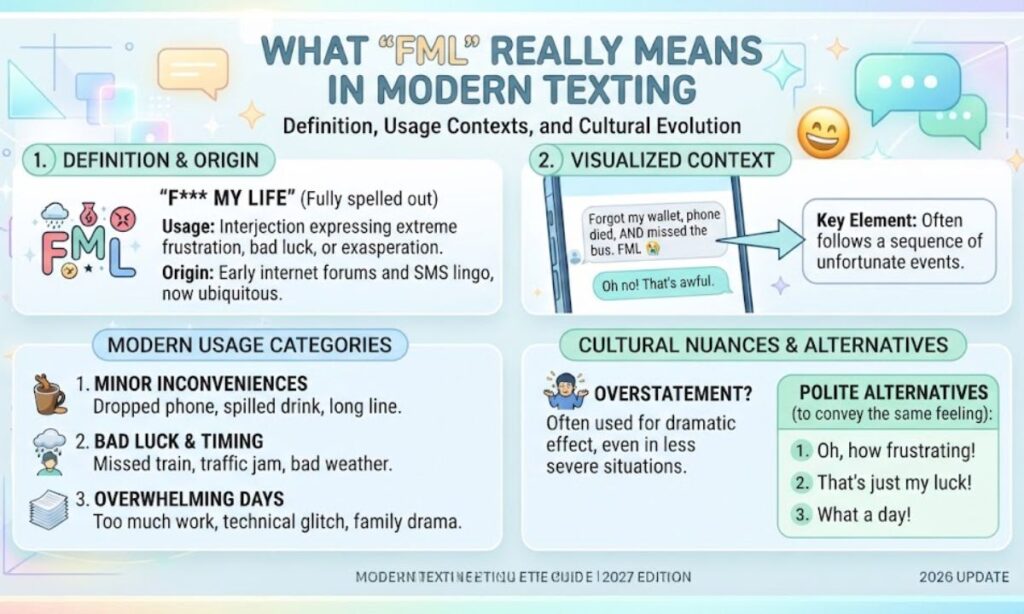
FML stands for “F* My Life.”** It’s a slang expression people use to vent about frustration, bad luck, or an annoying situation. Think stubbing your toe, missing the bus, or bombing a job interview — FML MEANS is the digital sigh that follows.
Literal Definition vs. Real Usage
Literally, FML is a crude expression of frustration. In real conversation, though, it rarely carries that much weight. Most people use it the way they’d use “ugh” or “of course this happens to me” — more exasperated than genuinely upset.
When People Typically Use It
- After a small inconvenience (spilled coffee, dead phone battery)
- Reacting to embarrassing moments
- Venting about work, school, or dating mishaps
- Captioning a relatable “bad day” moment on social media
- Responding to a friend’s unlucky story with shared sympathy
Why Tone Matters More Than the Words
Because text has no vocal tone, FML can read as genuinely upset or completely joking depending on context. A lowercase “fml lol” feels lighthearted. A standalone “FML.” with no punctuation can feel heavier. Readers fill in the emotional gap themselves, which is exactly why word choice and delivery matter so much.
The Hidden Downsides of Saying “FML”
It Can Sound Negative or Dramatic
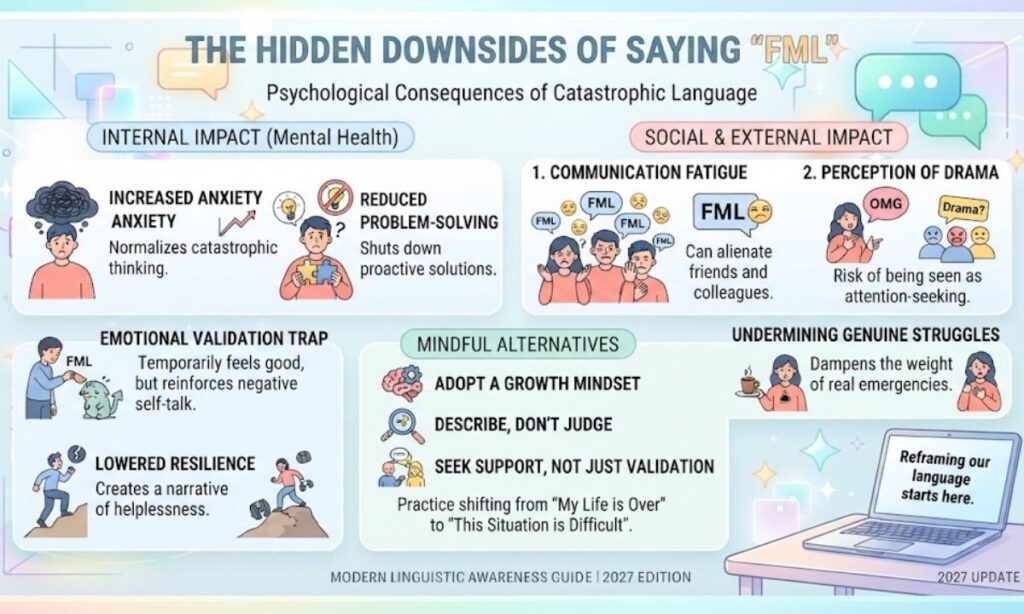
Even when meant casually, FML MEANS frames a moment as worse than it might be. Overusing it can make small annoyances sound like full-blown crises, which isn’t always the vibe you’re going for.
It Damages Professional Perception
FML contains implied profanity, which makes it a poor fit for workplace chats, emails, or client-facing conversations — even in casual company culture. It can come across as unprofessional or overly dramatic to coworkers and managers.
FML Meaning in Finance
In finance-related conversations, “FML” doesn’t carry any official or technical meaning — it’s still just the casual slang expression, often used informally by traders or employees reacting to a bad market day or a costly mistake, rather than any recognized financial term.
FML Meaning in Corporate
In corporate settings, FML is sometimes used informally in private chats between coworkers to vent about a rough meeting or missed deadline, but it’s rarely, if ever, appropriate in official communication, emails, or anything visible to leadership or clients.
FML Meaning in Education
Among students, FML often shows up around exams, deadlines, or group projects gone wrong. It’s typically used in peer-to-peer messaging rather than anything submitted to teachers or included in academic work.
It Can Be Misunderstood Across Cultures
Slang doesn’t always translate. Non-native English speakers or people from different cultural backgrounds may not immediately understand FML, or may interpret its bluntness more harshly than intended.
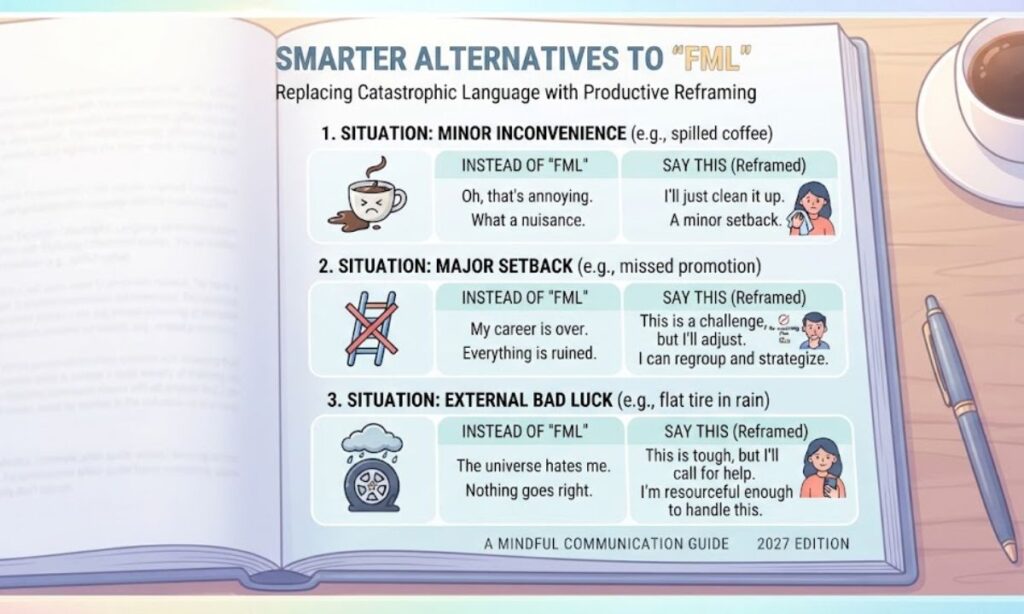
Smarter Alternatives to “FML” (Based on Real-Life Situations)
Casual Alternatives (Friends, Texts, Social Media)
- “Ugh, of course.”
- “Why is this happening to me today?”
- “Not today, please.”
- “I can’t with today.”
- “Rough day energy.”
Professional Alternatives to FML (Work, Emails, Meetings)
- “This has been a challenging day.”
- “Running into a few setbacks today.”
- “Today’s not going as planned.”
- “Hitting some unexpected hurdles.”
Polite & Neutral Alternatives (Formal Settings)
- “That’s unfortunate.”
- “What a frustrating situation.”
- “This is a tough one.”
- “I’m having a difficult time with this.”
Emotionally Aware Alternatives (When You’re Truly Frustrated)
- “I’m feeling really overwhelmed right now.”
- “Today has genuinely been hard.”
- “I need a minute, this has been a lot.”
How to Respond When Someone Else Says “FML”
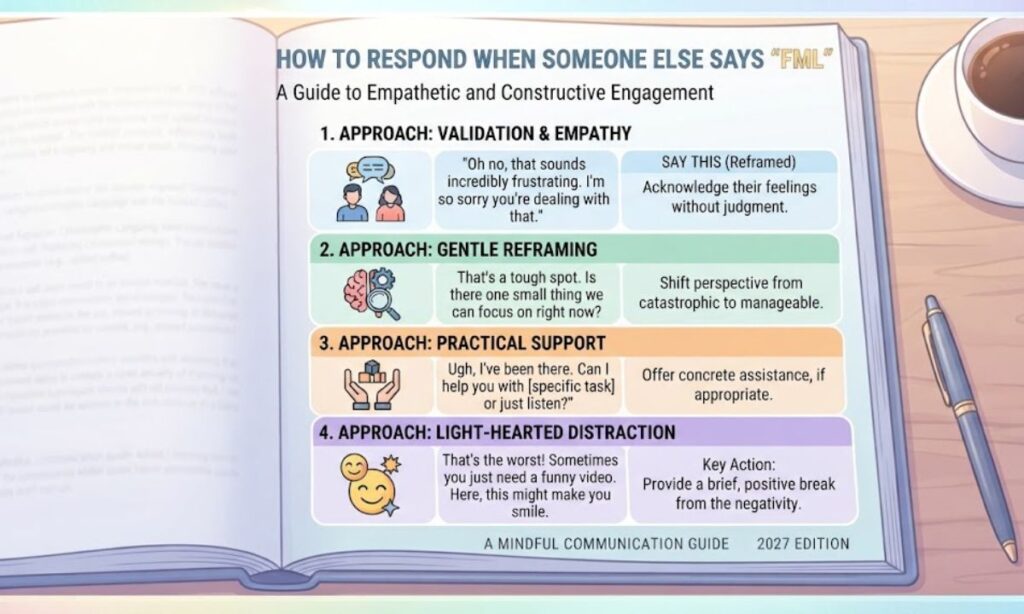
Supportive Responses That Show Empathy
- “That sounds so frustrating, I’m sorry.”
- “Ugh, that’s rough. Want to talk about it?”
- “I hear you, today sounds like a lot.”
Light, Friendly Responses
- “Oof, big mood.”
- “Send help, I guess we’re both struggling today.”
- “That’s a certified bad day.”
What to Avoid Saying
- Dismissing the feeling (“it’s not that deep”)
- Making a joke before checking their tone
- Comparing it to a “worse” problem
Real-World Examples: Before vs. After
Casual Text Example
Before: “Missed my train AGAIN. FML.” After: “Missed my train again, why does this keep happening 😩”
Also Read This Meaning OMY meanings
Workplace Example
Before: “The client changed the whole brief last minute, FML.” After: “The client changed the brief last minute — today’s been a lot.”
Social Media Example
Before: “Spilled coffee on my laptop right before my presentation. FML.” After: “Spilled coffee on my laptop right before my presentation. Send strength 😭”
Choosing the Right Alternative (Simple Tone Framework)
The 3-Step Tone Check
- Who’s reading this?
- Friend, coworker, stranger, or public audience.
- How serious is the situation?
- Minor annoyance or genuinely upsetting.
- What tone do I want to convey?
- Playful, neutral, or sincerely venting.
Quick Tone Comparison Table
| Situation | Best Alternative | Tone |
| Small annoyance with friends | “Ugh, of course.” | Playful |
| Work setback | “Running into some challenges today.” | Professional |
| Formal or public message | “That’s unfortunate.” | Neutral |
| Genuinely overwhelmed | “Today has been really hard.” | Sincere |
Why Word Choice Shapes How People See You
Language and Emotional Intelligence
The words you choose to express frustration say a lot about how self-aware and adaptable you are in different settings. Swapping FML for something more intentional shows you can read the room, whether that room is a group chat or a Slack channel.
Small Changes, Big Impact (Mini Case Study)
Imagine two coworkers texting after a rough meeting. One texts, “FML, that was a disaster.” The other texts, “That meeting really threw me off, today’s been tough.” Both express the same frustration, but the second version reads as more composed and relatable without losing the honesty behind the feeling.
Using Humor Without Sounding Negative
When Humor Works Best
Humor works well when the situation is minor and the audience already knows your tone — close friends, casual group chats, or lighthearted social posts.
Examples of Light Humor Replacements
- “Adding this to my villain origin story.”
- “Cool, cool, cool, everything’s fine.”
- “Today said ‘let’s test your patience.'”
How People Express Frustration in 2026
Shift Toward Softer, Self-Aware Language
Newer slang trends lean toward expressions that acknowledge frustration without sounding harsh, reflecting a broader shift toward emotionally aware digital communication.
Rise of Relatable, Meme-Style Expressions
Phrases and reaction GIFs increasingly replace blunt acronyms like FML, letting people express the same feeling through humor and relatability instead of profanity-based shorthand.
Why Simpler Language Wins
Clear, simple phrases travel better across platforms, generations, and cultures than slang-heavy expressions — making them easier to understand and less likely to be misread.
Quick Reference: Best Alternatives to “FML” by Situation
Cheat Sheet List
- Friends/casual: “Ugh, of course,” “Big mood,” “Not today”
- Work/professional: “Running into setbacks,” “Challenging day”
- Formal/public: “That’s unfortunate,” “A tough situation”
- Genuine venting: “Today’s been really hard,” “I’m feeling overwhelmed”
Frequently Asked Questions
What does FML stand for?
FML stands for “F*** My Life,” a slang phrase used to express frustration or disappointment.
Is FML appropriate to use at work?
No, FML contains implied profanity and is best avoided in professional or formal communication.
Is FML always meant seriously?
No, FML is often used casually or humorously rather than expressing genuine distress.
What’s a polite alternative to FML?
“That’s unfortunate” or “What a frustrating situation” work well in polite or formal settings.
How should I respond if someone texts me FML?
A supportive reply like “That sounds rough, are you okay?” works better than dismissing the feeling.
Does FML mean something different in finance or education?
No, FML doesn’t have an official meaning in those fields — it’s still the same casual slang, just used informally within those contexts.
FML Meaning Urban Dictionary
On Urban Dictionary, FML is defined largely the same way it’s used in everyday texting — as an expression of frustration or bad luck, often illustrated with exaggerated, humorous examples. Some entries also highlight its ironic or sarcastic use, where people FML about trivial things purely for comedic effect. Since Urban Dictionary is user-submitted, definitions can vary in tone, so it’s best used as a cultural reference rather than an official source.
FML Meaning on Snapchat
On Snapchat, FML is used the same way as in regular texting — a quick way to react to something frustrating or embarrassing, often paired with captions on snaps or replies to a friend’s story. It’s especially common under funny fails, awkward moments, or relatable “bad day” content, where the tone is usually more playful than genuinely upset.
FML Full Form and Origin
The full form of FML is “F*** My Life.” The phrase gained popularity in the early 2000s through internet forums and SMS texting, later becoming widely known through a website where users shared short, unlucky, or embarrassing life moments using the phrase as a caption. Over time, it shifted from a purely negative expression into a more casual, often comedic piece of internet slang.
Final Thoughts
FML is a small phrase with a big presence in modern texting, but it’s not always the best fit for every conversation. Understanding its real meaning — and knowing when a softer, more intentional alternative works better — helps you communicate frustration without sounding overly dramatic or unprofessional. Whether you keep using it with friends or swap it out in more formal settings, the goal is the same: say what you mean, in a way that fits the room you’re in.
