

Why “JS” Shows Up Everywhere in Modern Texting

Scroll through any group chat, comment section, or DM in 2026, and you’ll likely spot “js” tucked at the end of a message. It’s short, quick to type, and carries a surprising amount of emotional weight for just two letters. People use it to share opinions, soften criticism, or add a casual tone to an otherwise blunt statement. Understanding what “js” really means helps you read tone correctly and avoid awkward misunderstandings in your own conversations.
What Does JS Mean in Text? (Clear Definition)
In texting and online slang, JS most commonly means “just saying,” a casual way to share a thought without pressure. It’s usually added to the end of a sentence to make an opinion, suggestion, or observation feel lighter and less confrontational.
js meaning
JS stands for “just saying” — a way to express a thought casually without sounding demanding or harsh.
what does js mean
JS means “just saying” in most texting and social media conversations, though it can carry other meanings depending on context.
JS Full Form in Chat
The full form of JS in everyday texting is simply “Just Saying.” It’s not an official word — it’s a shorthand that grew out of everyday spoken English, shortened for faster typing.
Other Possible Meanings (Rare but Important)
While “just saying” is the dominant meaning, JS can occasionally stand for something else depending on the setting:
| Alternate Meaning | Where It’s Used |
| JavaScript | Coding and tech conversations |
| Junior School | Education/school context |
| Just | Informal shorthand |
What Does JS Mean in Texting vs Chat vs Social Media?
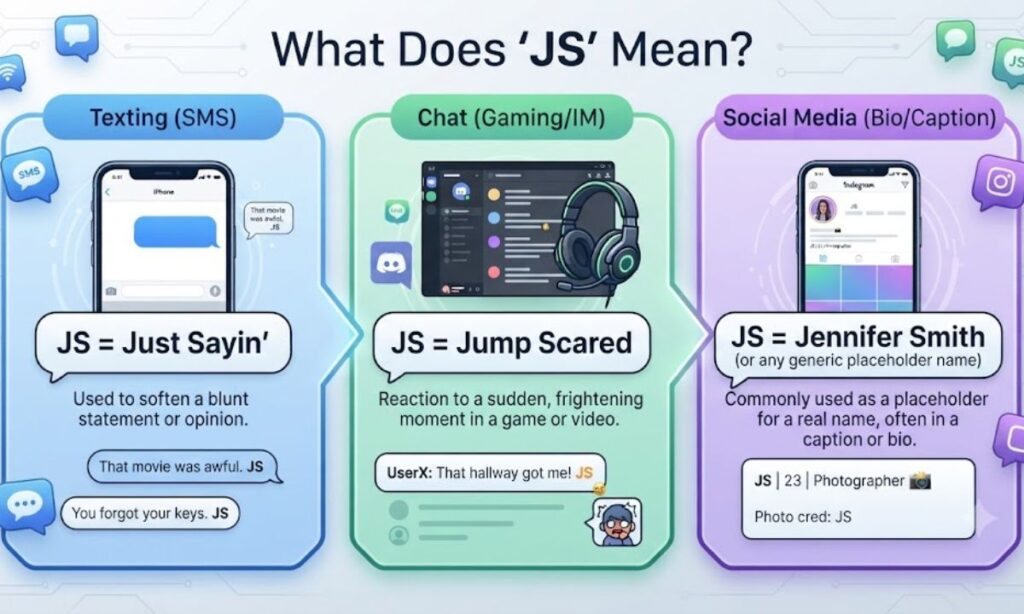
The meaning of JS stays mostly consistent across platforms, but the tone and intent can shift slightly depending on where it’s used.
JS Meaning in Chat
In one-on-one or group chats, JS softens an opinion so it doesn’t come across as too direct or pushy.
JS Meaning in Social Media
On social platforms, JS often appears in comments or captions to share a casual thought without inviting an argument.
What Does JS Mean on TikTok?
On TikTok, JS is used the same way as in texting — to add a casual, non-confrontational tone to a comment. People often use it after sharing an opinion on a video to keep things light-hearted rather than critical.
The Hidden Tone Behind “JS” (What People Really Mean)
JS isn’t just about saving keystrokes — it’s about controlling tone. Adding “js” to a sentence can turn a blunt statement into something that feels more like a passing thought than a firm opinion.
Why “JS” Feels Passive-Aggressive
Sometimes JS is used to soften criticism, which can unintentionally make a comment feel more pointed or sarcastic rather than less.
How “JS” Changes Meaning in a Sentence
The same sentence can feel completely different with or without JS attached — it usually removes intensity and adds a casual, offhand feeling.
Real Example Breakdown
“You’ve been quiet lately” sounds direct and concerned. “You’ve been quiet lately, js” softens it into a passing observation rather than a confrontation.
When You Should Use “JS” in Text Messages
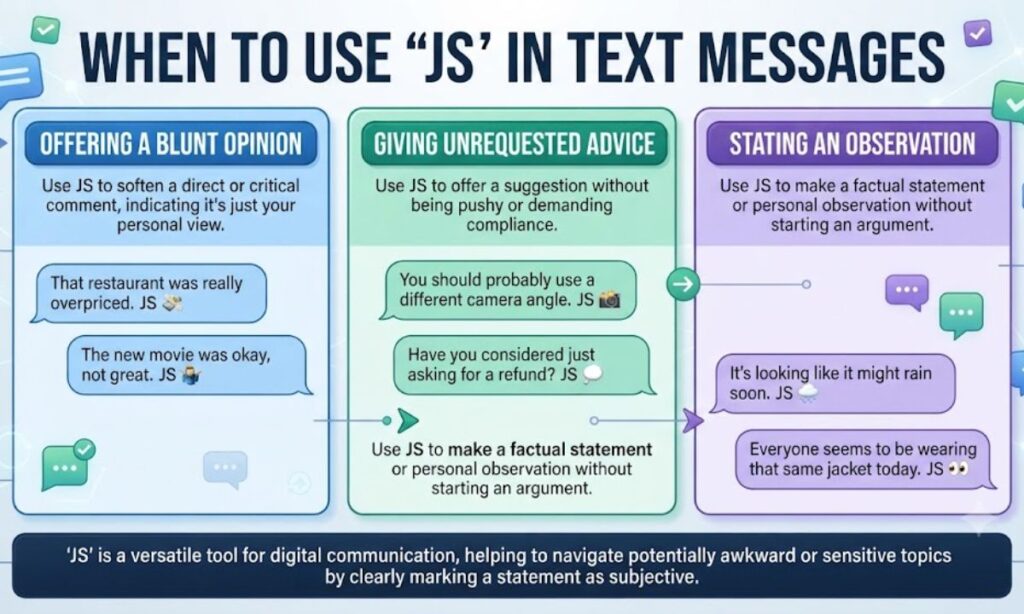
JS works best in low-stakes, casual conversations where you want to share a thought without making it feel heavy.
Best Situations to Use JS
- Giving light feedback to a friend
- Sharing a personal opinion casually
- Adding humor or playful teasing
- Softening advice you weren’t asked for
Why It Works in These Cases
In these situations, JS signals that you’re not trying to start a debate — you’re just tossing out a thought.
When NOT to Use “JS” (Avoid These Situations)
JS doesn’t always land well, especially in serious or professional conversations.
Avoid Using JS When
- Discussing serious personal or emotional topics
- Communicating in professional or work settings
- Trying to clearly state an important boundary
- Apologizing or addressing conflict
Why It Backfires
In serious moments, JS can make you sound dismissive or unclear about how you truly feel, which can create more confusion than clarity.
Better Alternatives to “JS” Based on Tone
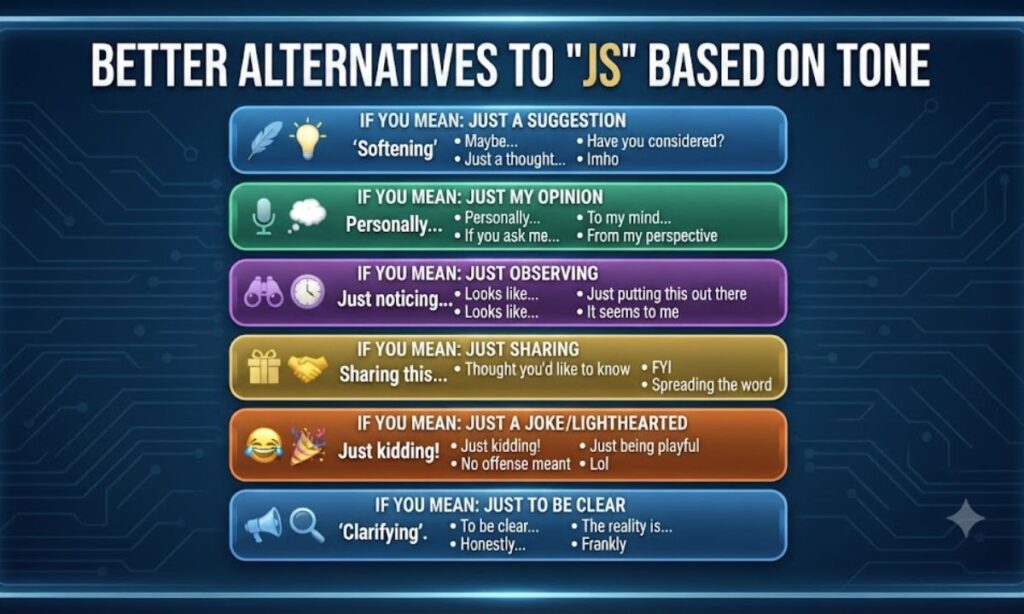
If JS doesn’t fit the moment, there are plenty of alternatives depending on how formal or casual you want to sound.
Casual Alternatives to Just Saying
“No cap,” “not gonna lie,” “real talk”
Also read this meaning FW mean in text
Polite Alternatives
“Just a thought,” “just my opinion,” “food for thought”
Professional Alternatives
“For your consideration,” “just to note,” “worth mentioning”
Quick Comparison Table
| Tone | Alternative Phrase |
| Casual | “Not gonna lie” |
| Polite | “Just a thought” |
| Professional | “Worth mentioning” |
Real-Life Examples of “JS” in Conversations
Example 1: Friends Chat
“That movie was mid, js.” — A casual opinion shared without pressure.
Example 2: Relationship Context
“You could text back a little faster, js.” — A gentle nudge rather than a complaint.
Example 3: School Context
“You should double-check that answer, js.” — Friendly advice, not a correction.
How to Respond to “JS” (Smart Replies That Work)
Knowing how to reply to a “js” message keeps the conversation smooth and prevents unnecessary tension.
Neutral Responses
“Fair enough,” “noted,” “okay, thanks for saying”
Clarifying Responses
“What do you mean by that?” or “Say more?”
Confident Responses
“I hear you, but I see it differently.”
Quick Dialogue Example
Friend: “You’ve been on your phone a lot, js.” You: “Fair, I’ll try to cut back a bit.”
Generational Differences in JS Usage
Gen Z Usage
Gen Z uses JS constantly in texting and social media, often blending it with emojis for extra tone control.
Millennials
Millennials use JS too, but often in a more literal, straightforward way without as much layered sarcasm.
Older Users
Older users are less familiar with JS and may need more context to understand its casual tone.
Platform Differences: Where “JS” Feels Different
TikTok
Comments use JS to soften opinions about videos or trends without sounding harsh.
JS appears in both casual and semi-formal chats, depending on the relationship between users.
JS shows up frequently in captions and comments, usually paired with a casual or playful tone.
The Psychology Behind “JS”
Common Reasons
People use JS to avoid sounding too forceful, to protect themselves from backlash, or to test the waters before sharing a stronger opinion.
Why It Often Fails
Because tone is hard to read in text, JS can sometimes make a message feel more passive-aggressive than intended, even when that wasn’t the goal.
JS in Memes and Internet Culture (2026)
JS has become a common punchline in memes, often used ironically to point out obvious or blunt statements. It’s a small but recognizable part of internet humor, especially in caption-style jokes.
Quick Guide: How to Use “JS” Without Sounding Passive-Aggressive
Checklist
- Keep the sentence before it neutral, not accusatory
- Avoid using it after harsh criticism
- Pair it with a friendly tone or emoji when needed
- Use it sparingly, not in every message
JS vs Other Slang: Know the Difference
Comparison Table
| Slang | Meaning |
| JS | Just saying |
| JST | Just / just saying (variation) |
| TS | This / that sucks (context-based) |
| FW | Like or support something |
Does JS Mean “Just”?
Yes, in some informal cases JS can mean “just,” though “just saying” remains the more common usage.
How to Use Slang in Messages the Right Way
Best Practices
Match your slang to your audience, keep tone in mind, and avoid slang entirely in formal writing or professional messages.
Emoji and Tone in Messages
Adding an emoji after JS can clarify whether the comment is playful, serious, or sarcastic, reducing the risk of misreading tone.
Texting Etiquette 2025–2026: What’s Changing
Key Trends
Texting culture increasingly values brevity paired with emotional clarity, meaning people now pair short slang like JS with emojis or GIFs to avoid misunderstandings.
Case Study: When “JS” Caused Miscommunication
Scenario
A friend texted “You’ve changed a lot, js” without further explanation, leaving the other person unsure if it was a compliment or criticism.
Outcome
The lack of context turned a casual comment into a longer, tense conversation neither person expected.
Lesson
JS works best when the sentence before it is already clear — it shouldn’t be the only thing carrying the message’s meaning.
Clear Communication Beats Clever Shortcuts
While slang like JS keeps conversations quick and casual, it’s not a replacement for clarity. When something truly matters, spelling out your thoughts fully avoids confusion and keeps relationships stronger.
Final Takeaway: Should You Use “JS” in 2026?
JS remains a handy, casual way to soften opinions and keep conversations light. Use it freely with friends and in low-stakes chats, but skip it when the moment calls for honesty, clarity, or seriousness. Knowing when — and when not — to use it is the real skill behind this simple two-letter slang.
Frequently Asked Questions
What does JS mean in a text from a girl?
It usually means “just saying” — a casual way to share an opinion or observation.
What does JS mean from a guy?
Same meaning as with anyone else — “just saying,” often used to keep a comment light or playful.
Is JS the same as JavaScript?
Only in tech or coding conversations; in texting, it almost always means “just saying.”
Can JS sound rude?
Yes, depending on tone and the sentence before it, JS can come across as passive-aggressive.
What’s the difference between JS and JST?
They’re used almost interchangeably, with JST being a less common variation of “just saying.”
Should I use JS in professional messages?
No, it’s best kept for casual or informal conversations only.
