
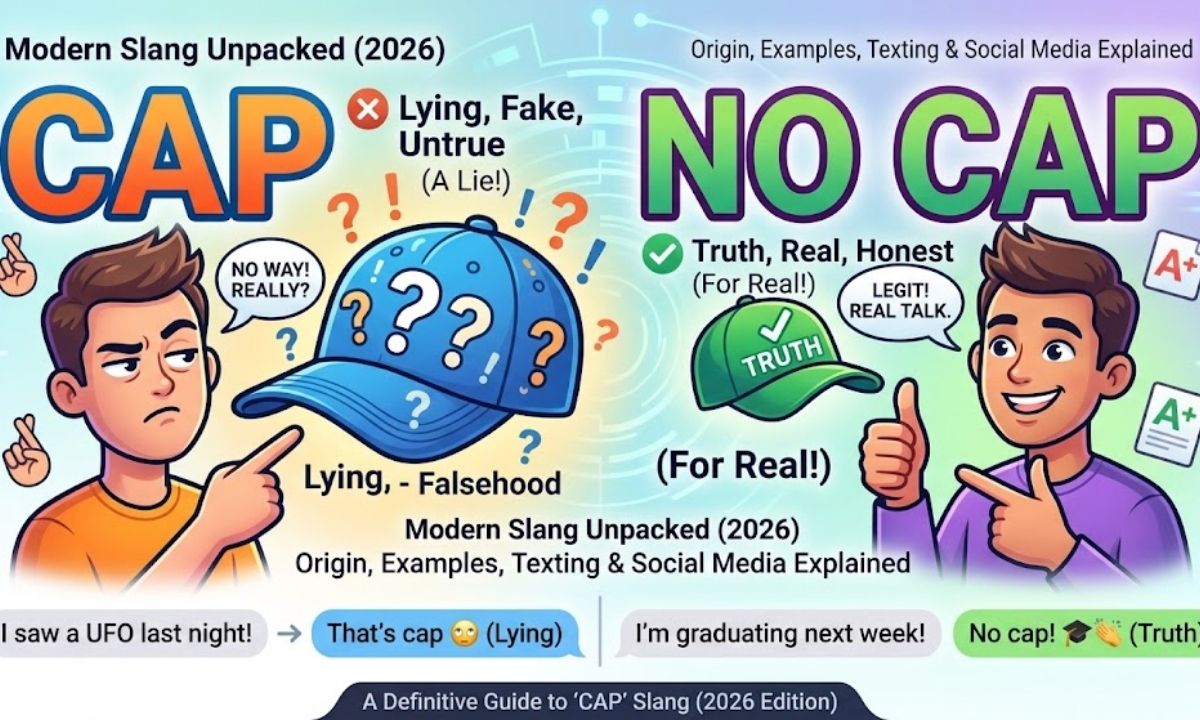

Slang moves fast, and “cap” is one of the terms that has stuck around long enough to become a permanent part of everyday texting and social media conversation. If you’ve seen it and wondered what it actually means, this guide covers every angle — meaning, origin, platform usage, examples, and all the related phrases people search for.
What Does Cap Mean?
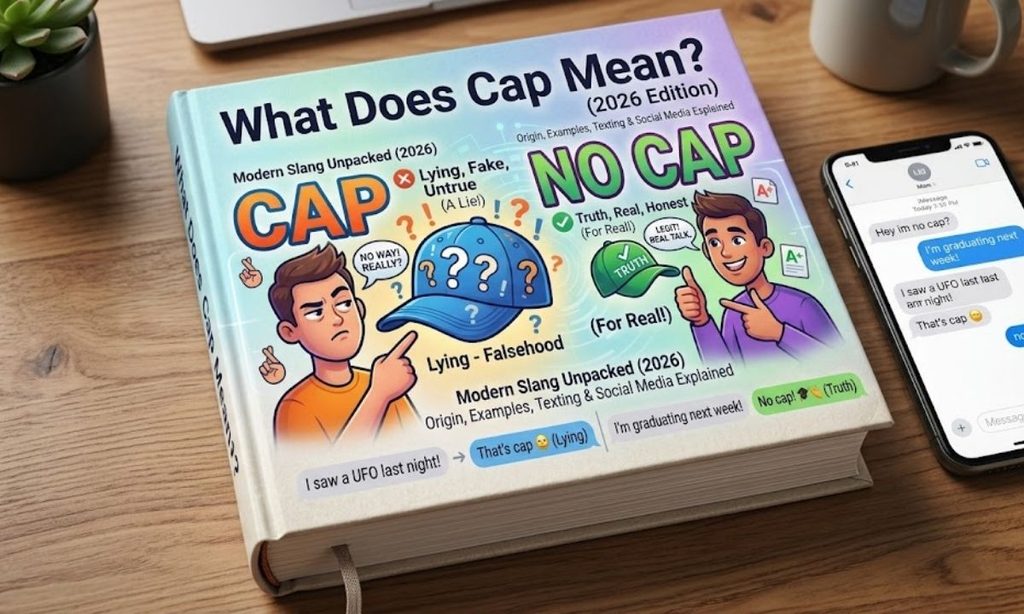
In slang, “cap” means a lie, exaggeration, or false statement. When someone says “that’s cap,” they mean “that’s not true.” If someone is “capping,” they’re lying or stretching the truth.
| Term | Meaning | Example |
| Cap | A lie / something false | “You ran a mile in 3 minutes? Cap.” |
| Capping | Lying or exaggerating | “Stop capping, you weren’t even there.” |
| No cap | No lie / for real | “This burger is amazing, no cap.” |
| Stop the cap | Stop lying | “Stop the cap, we both know the truth.” |
Origin and History of “Cap”
“Cap” comes from African American Vernacular English (AAVE) and dates back to the early-to-mid 1900s. “Capping” originally meant boasting, exaggerating, or “talking big,” and was tied to competitive wordplay traditions like “The Dozens.” Over time, the meaning shifted from bragging to outright lying.
The term exploded into mainstream use through Southern hip-hop lyrics in the mid-2010s, especially from Atlanta-based artists, before spreading across TikTok, Twitter/X, and Instagram by the late 2010s and early 2020s.
How “Cap” Is Used on Different Platforms
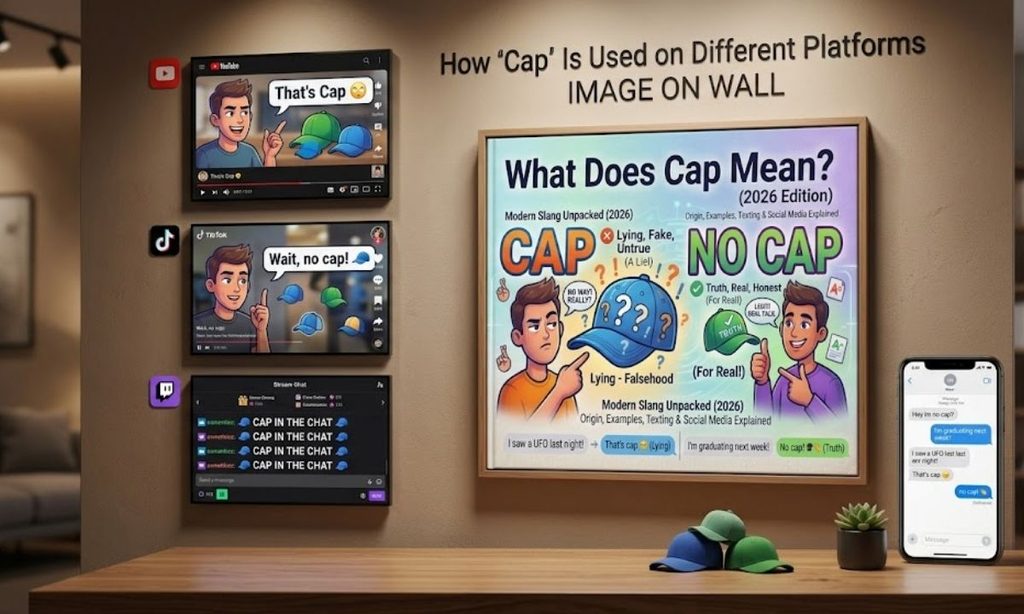
- TikTok
- Used in comments to challenge exaggerated claims or storytimes.
- Common in captions/comments, often paired with 🧢.
- Twitter/X
- Used to call out viral claims or hot takes.
- Snapchat/Texting
- Casual back-and-forth between friends.
- Gaming chats (Discord/Twitch)
- Used to question someone’s stats or achievements.
Cap in Texting vs. Real Life
| Context | Common Usage |
| Texting | Often paired with 🧢 emoji instead of the full word |
| Social media comments | Publicly calls out exaggerated posts |
| Spoken conversation | Casual, often teasing tone |
| Formal settings | Rarely used — too informal |
Examples of “Cap” in Sentences
- “He said he met the whole team backstage. That’s a cap.”
- “No cap, this is the best coffee I’ve had all year.”
- “You’re capping if you think that movie was better than the book.”
- “Stop the cap, we all saw what really happened.”
- “I had a cap moment earlier — told my friend I finished the project when I hadn’t even started.”
Variations and Related Slang
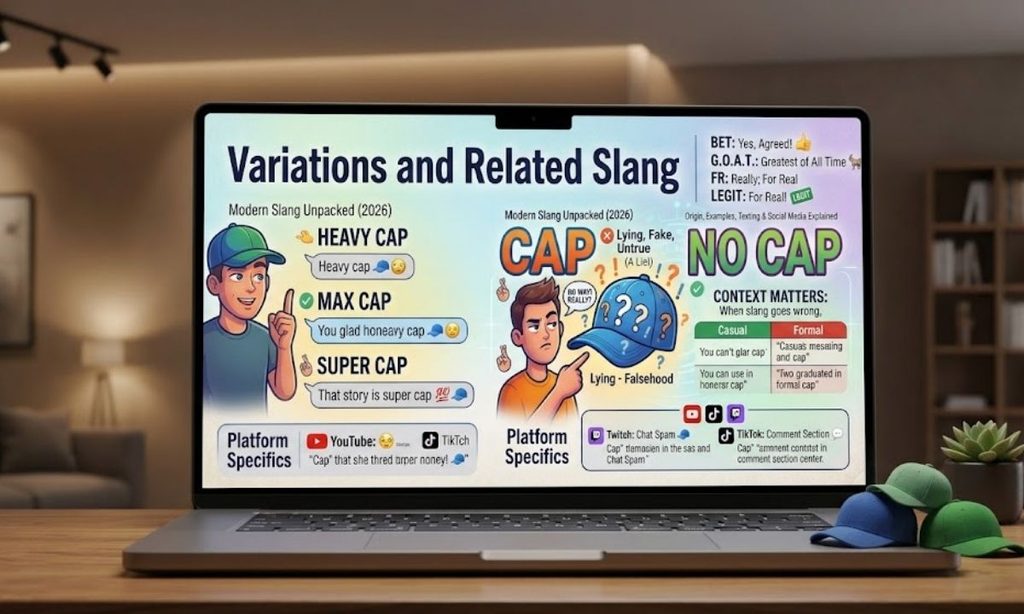
- No cap
- No lie, I’m serious
- Stop the cap / stop capping
- Stop lying
- Cap or no cap?
- Asking if something is true
- You’re capping
- Direct accusation of lying
- Big cap
- An obvious, major lie
- 🧢 emoji
- Visual shorthand for lying
Is “Cap” Safe for Kids?
Yes. “Cap” and “no cap” are harmless slang terms used to express honesty or call out exaggeration. They carry no offensive meaning and are widely used by teens in everyday, casual conversation.
When to Use (and Avoid) “Cap”
Use it when:
- Chatting with friends
- Commenting on social media
- Emphasizing honesty (“no cap”)
Avoid it when:
- Writing professional emails
- Speaking in formal or academic settings
ALSO READ THIS : WHAT DOES IYKYK MEAN
What Does No Cap Mean
“No cap” means “no lie,” “for real,” or “I’m being completely honest.” It’s added to a sentence to stress sincerity, like: “That test was so hard, no cap.”
No Cap Meaning in Text
In texting, “no cap” confirms truthfulness, same as in speech. It’s often paired with the 🧢 emoji or intensified as “fr fr no cap” (for real, for real, no lie).
Cap Meaning on TikTok
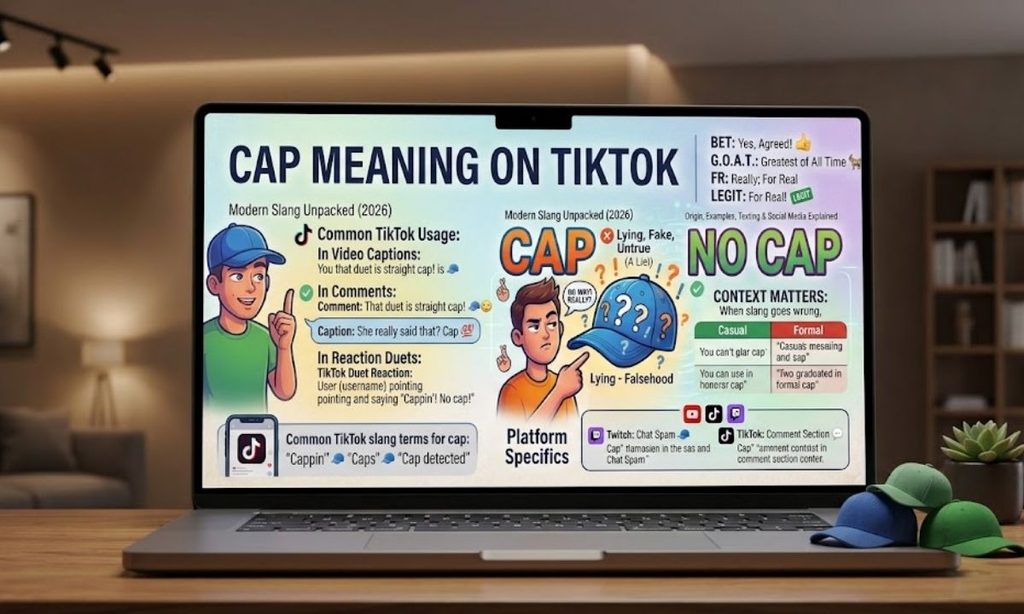
On TikTok, “cap” appears in comment sections when viewers think a creator’s claim — a transformation, story, or achievement — sounds exaggerated or made up.
Cap Meaning in Chat
In gaming and messaging apps, “cap” is used to jokingly question a friend’s exaggerated scores, stories, or claims during casual chat.
Cap Meaning Urban Dictionary
Urban Dictionary defines “cap” as “a lie,” with “no cap” meaning “no lie” — matching how the term is used across mainstream platforms today.
What Does Cap Mean on Social Media
On social media, “cap” questions the authenticity of a post or claim — essentially a shorthand for “I don’t believe that.”
What Is a Cap Slang Drug
Separately from the “lying” meaning, “cap” also has an older, unrelated slang usage referring to a small capsule or dose of a drug. Context determines which meaning applies.
What Does Cap Mean in Slang TikTok
Same core meaning as elsewhere: on TikTok, “cap” flags exaggerated or false claims made in videos or captions.
Cap Meaning Slang Origin
The word traces back to AAVE, evolving from “capping” (bragging/lying) in early-1900s Black culture, later popularized through hip-hop lyrics in the 2010s.
I Had a Cap Meaning
This phrase means someone admitted to a small lie or exaggeration, often used self-deprecatingly — like owning up to a minor fib.
What Does Stop the Cap Mean in Slang
“Stop the cap” is a direct call to stop lying or exaggerating, usually said playfully among friends rather than as a serious accusation.
Cap Slang Example
“He said he beat the game in one day. Cap.” — calling out a claim that sounds unbelievable.
What Does Cap Mean in Slang Urban Dictionary
According to crowd-sourced definitions, “cap” simply means a lie or false statement — consistent with everyday usage across platforms.
Why Does Cap Mean Lie
It traces back to “capping” — an old AAVE term for boasting or “topping” a story during competitive wordplay. Over time, exaggerating a story blurred into outright lying, giving us today’s meaning.
Conclusion
“Cap” and “no cap” are more than passing internet trends — they’re rooted in decades-old African American Vernacular English and have become permanent fixtures in modern slang thanks to hip-hop and social media. Now that you know “cap” means lie and “no cap” means truth, you’ll never be confused by a comment section again.
Frequently Asked Questions
What does “cap” mean in slang?
“Cap” means a lie or exaggeration — something that isn’t true.
What does “no cap” mean?
“No cap” means “no lie” or “I’m being completely honest.”
Where did “cap” slang originate?
It originated in African American Vernacular English, evolving from “capping” in early 20th-century Black culture.
Is “cap” appropriate for kids to use?
Yes, it’s harmless, casual slang commonly used among teens.
What’s the difference between “cap” and “capping”?
“Cap” is the lie itself; “capping” is the act of lying or exaggerating.
What does the 🧢 emoji mean in texting?
It visually represents “cap,” signaling that something is a lie or exaggeration.
Does “cap” have another meaning besides lying?
Yes, in some contexts it refers to a drug capsule, an unrelated older slang usage.
