

Most people don’t fail at personal growth because they lack motivation. They fail because their systems collapse the moment life gets busy. You’ve probably felt this yourself — a strong Monday, a slow Wednesday, and by Friday the habit tracker is untouched and the goals feel far away again.
That gap between wanting change and actually sustaining it is exactly what Dreamwithjeff.com is built around. Instead of chasing motivation spikes, it focuses on small, repeatable systems — habits, goals, mindfulness, and self-awareness — that hold up even on low-energy days. This guide breaks down what the platform is, why typical advice fails, and how to actually use a system-based approach to build lasting success in 2026.
What Dreamwithjeff.com Is (and Isn’t)
Dreamwithjeff.com positions itself as a practical personal growth resource centered on four core pillars: goal setting, habit formation, journaling, and mindfulness. It is described as a structured way to turn vague intentions into daily, trackable actions rather than a source of short-lived inspiration.
Here’s what it isn’t:
- It isn’t a hype-driven “unlock your potential in 30 days” program.
- It isn’t built around countdown timers or urgency-based pressure tactics.
- It isn’t a passive content library meant to be consumed once and forgotten.
And here’s what it aims to be:
- A structured system for converting intentions into daily action.
- A framework that keeps working even when motivation drops.
- A resource built around implementation, not just information.
Note: As with many personal development platforms, claims about specific features are best verified directly on the site, since third-party coverage of niche platforms can vary in accuracy.
Why Most Personal Growth Advice Fails
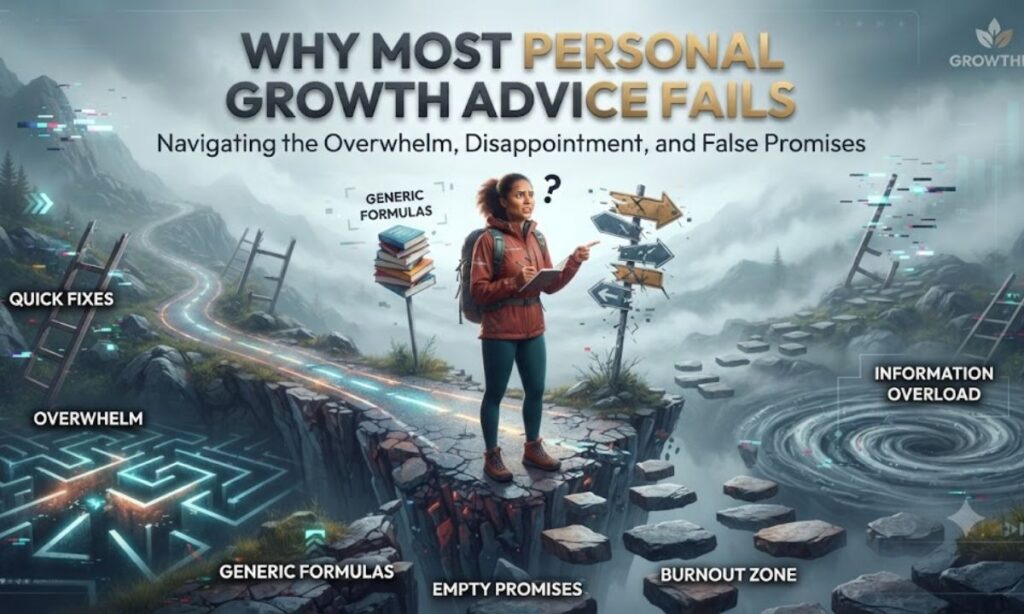
Personal growth content is everywhere — videos, threads, planners, courses. Yet most people who consume it don’t see lasting change. The reason isn’t a lack of information. It’s a lack of structure.
Common failure points include:
- Information overload — consuming advice without ever applying it.
- All-or-nothing habits — routines too rigid to survive a busy week.
- Motivation dependency — relying on feeling inspired instead of having a system.
- No feedback loop — no way to see progress, so momentum dies quietly.
| Common Approach | Why It Struggles |
| Motivational content | Creates short bursts of energy, not lasting behavior change |
| Rigid productivity hacks | Break down under stress or schedule changes |
| Generic goal-setting | Focuses on outcomes, not the daily actions that create them |
| Passive consumption | Feels productive but doesn’t change behavior |
The Core Philosophy: Systems Beat Motivation
Motivation is unreliable by nature. It rises and falls with sleep, stress, and mood. Systems don’t. A system is a repeatable process that produces results regardless of how you feel on a given day.
This is the central idea behind the platform’s approach:
- Motivation gets you started.
- Systems keep you going.
- Small, consistent actions compound into meaningful results over time.
Instead of asking “how do I feel more motivated,” the more useful question becomes “what’s the smallest version of this habit I can do today, even on a bad day?”
ALSO READ THIS MEANING EXPERT GAMING REVIEWS
How Goal-Setting Actually Works Here
Goal-setting often fails because it stops at the outcome. “Get in shape” or “save more money” sounds clear but gives you nothing to actually do on a Tuesday morning.
A more effective approach breaks goals into layers:
- Direction — the broad outcome you want.
- Milestones — measurable checkpoints along the way.
- Daily actions — the specific, controllable steps you take today.
This structure shifts attention away from distant results and toward actions you can control right now. Visible progress, even in small increments, creates the momentum needed to keep going.
Habit Formation, in Plain Terms
Habits are the backbone of long-term change. The mistake most people make is starting too big — an hour of exercise, a complete diet overhaul, an hour of journaling — and abandoning it within two weeks.
A more sustainable approach to habit formation looks like this:
- Start with a version of the habit so small it feels almost too easy.
- Attach the new habit to an existing routine (habit stacking).
- Track consistency, not perfection.
- Expect missed days — the goal is to return quickly, not to never fail.
The point isn’t to be flawless. It’s to build a pattern that survives real life.
Mindfulness as a Focus Tool, Not a Buzzword
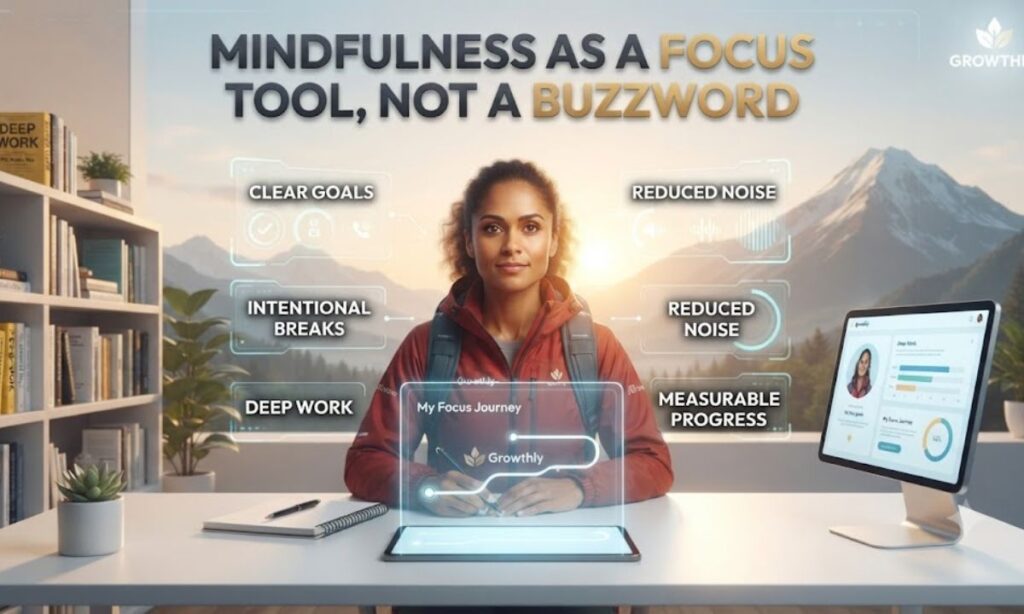
Mindfulness is often marketed as a vague wellness trend, but at its core, it’s a practical tool for attention management. When used intentionally, it helps you notice distraction, stress, or avoidance before they derail your day.
Practical mindfulness looks less like an hour-long meditation retreat and more like:
- A short pause before switching tasks.
- Noticing when you’re reacting emotionally instead of acting deliberately.
- Brief check-ins during the day to reset focus.
Used this way, mindfulness supports every other part of the system — it’s what helps you notice when a habit or goal is slipping before it fully falls apart.
Self-Discovery: Understanding Before Changing
You can’t build a system around your life if you don’t understand your actual patterns — your energy peaks, your triggers for procrastination, or the times of day you’re realistically productive.
Self-discovery in this context isn’t abstract self-reflection. It’s practical data-gathering:
- When are you naturally most focused?
- What situations consistently derail your routines?
- Which habits have stuck before, and why?
Understanding these patterns makes goal-setting and habit-building far more realistic, because the plan fits your actual behavior instead of an idealized version of it.
Burnout and Energy Management
Discipline without energy management leads to burnout, not growth. Many people push through exhaustion in the name of consistency, only to crash and abandon the entire system.
A sustainable approach treats energy as a resource to manage, not an obstacle to override:
- Build recovery time into your schedule, not just after burnout hits.
- Match demanding tasks to your higher-energy hours.
- Treat rest as part of the system, not a break from it.
Ignoring energy limits doesn’t make you more disciplined — it just makes the collapse more likely.
Focus in a World Built to Fragment It
Notifications, endless tabs, and constant context-switching make sustained focus harder than ever. This isn’t a personal failing — it’s the predictable result of tools designed to capture attention.
Practical ways to protect focus include:
- Batching similar tasks instead of switching constantly.
- Designating specific times for checking messages and notifications.
- Working in defined blocks rather than open-ended stretches.
Protecting focus isn’t about willpower alone. It’s about designing your environment so distraction requires more effort than staying on task.
Applying This to Financial Goals
The same systems-based approach applies directly to money. Vague goals like “save more” rarely work. Breaking financial goals into direction, milestones, and daily or weekly actions makes them far more achievable:
- Direction: Build a three-month emergency fund.
- Milestone: Save a specific amount by a set date.
- Daily/weekly action: Automate a fixed transfer each payday.
Tracking these small actions consistently — rather than fixating on the final number — keeps financial goals from feeling overwhelming.
Dreamwithjeff.com vs. Typical Productivity Tools
| Feature Focus | Typical Productivity Tools | Dreamwithjeff.com Approach |
| Primary goal | Task and time management | Behavior and habit change |
| Motivation style | External deadlines, urgency | Internal systems, consistency |
| Success metric | Tasks completed | Sustainable daily action |
| Handles setbacks | Often assumes perfect adherence | Builds in room for missed days |
| Focus area | Efficiency | Self-awareness plus efficiency |
The key difference is scope. Productivity tools organize your to-do list. A systems-based growth approach tries to change the underlying behavior that determines whether you follow through at all.
How to Actually Use the Platform Well
Getting value from any personal growth system depends less on the tool and more on how consistently it’s used. A few practical guidelines:
- Start with one or two habits — not ten.
- Track consistency weekly, not daily perfection.
- Revisit goals monthly and adjust based on real progress.
- Use journaling or reflection to catch patterns early.
- Treat missed days as data, not failure.
Consistency compounds. A system used imperfectly but consistently will outperform a perfect plan abandoned after two weeks.
Common Mistakes That Stall Growth
- Trying to change everything at once instead of focusing on one habit.
- Chasing motivation instead of building a repeatable system.
- Ignoring energy levels and pushing through burnout.
- Setting vague goals with no measurable daily actions.
- Quitting after one missed day instead of simply resuming.
Avoiding these patterns matters more than finding the “perfect” method.
Who This Actually Helps
A systems-based, practical approach to personal growth tends to work best for:
- People who’ve tried motivation-based methods and burned out.
- Beginners who want simple, low-pressure entry points into habit-building.
- Busy professionals, students, freelancers, or entrepreneurs juggling multiple priorities.
- Anyone who wants measurable progress instead of vague inspiration.
It’s less suited to anyone looking for a quick fix or a single dramatic transformation, since the entire approach is built around gradual, compounding change.
Final Thoughts
Lasting personal growth rarely comes from a single burst of motivation. It comes from small, repeatable systems that hold up on ordinary days — not just the good ones. Focusing on habits over hype, systems over willpower, and consistency over perfection is what separates real, lasting change from another abandoned New Year’s resolution.
Whether you’re working on habits, goals, mindfulness, focus, or financial progress, the underlying principle stays the same: build a system small enough to sustain, and let consistency do the rest.
Frequently Asked Questions
What is Dreamwithjeff.com mainly about?
It’s positioned as a personal growth platform focused on practical habit formation, goal setting, mindfulness, and sustainable systems rather than short-term motivation.
Is Dreamwithjeff.com beginner-friendly?
Yes, based on its emphasis on small, simple, actionable steps, it appears designed to be accessible for people new to personal development.
Does it focus only on motivation?
No, the emphasis is on building consistent systems and habits that continue working even when motivation fades.
How is this different from a typical productivity app?
Productivity tools mainly organize tasks and time, while this approach focuses on changing the underlying behaviors and habits that drive follow-through.
Can this approach help with financial goals?
Yes, breaking financial goals into direction, milestones, and small daily or weekly actions works the same way it does for habits and personal goals.
How long does it take to see results?
Since the approach relies on small, compounding actions, most meaningful results build gradually over weeks and months rather than overnight.
What’s the biggest reason personal growth plans fail?
Most plans fail due to relying on motivation and rigid, all-or-nothing habits instead of flexible, sustainable systems.
