

If you have spent any time on TikTok, Instagram, or in a group chat lately, you have probably seen the word “pookie” pop up everywhere. It shows up in comment sections, captions, and casual texts between friends. This guide breaks down exactly what pookie means, where it came from, and how to use it the right way.
What Does Pookie Mean?
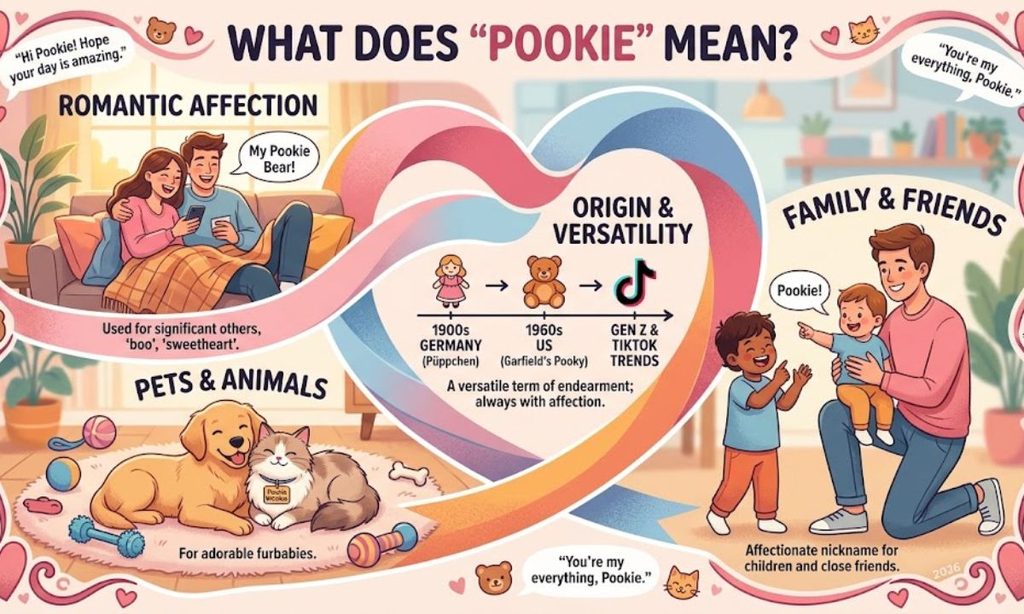
At its core, pookie is a term of endearment. It is used, often capitalized, as a term of endearment for a romantic partner, and it can refer to anyone a person feels love or affection for, including a friend or relative.
In simple terms, pookie means:
- A cute or affectionate nickname for someone you care about
- A playful way to refer to a partner, best friend, or even a pet
- A word that signals closeness, warmth, and familiarity
The exact meaning shifts slightly depending on who says it and where. That flexibility is part of why the word has spread so widely online.
Origin and History of “Pookie”
The history of pookie is more tangled than most slang words. There is no single confirmed origin story, but a few theories keep showing up in language research.
One popular theory traces the word back to Germany, where it may have started as a tender nickname for children before crossing into English. Another theory points to Celtic folklore. An early written record of “pookie” appears in an 1867 short story by Scottish author George MacDonald, where it referred to a mischievous, shapeshifting creature from Celtic mythology.
As a general term of endearment, though, the word’s trail in print is much more recent. The first known print use of pookie as a general term of endearment appeared in the mid-1960s, after earlier use as a nickname for a specific person.
Pop culture helped push the word into everyday language. Garfield’s teddy bear, created by Jim Davis, was named Pookie, and this cartoon connection is part of why many Gen X and baby boomer readers strongly associate the word with warmth and nostalgia.
Quick Timeline
| Era | Milestone |
| 1867 | Early written use of “pookie” tied to Celtic folklore |
| Mid-1900s | Possible German-influenced use as a nickname for children |
| 1960s | First print use as a general term of endearment |
| 1970s–1990s | Popularized through Garfield’s teddy bear |
| 2020s | Viral resurgence across TikTok, Instagram, and X |
Pookie Meaning Gen Z
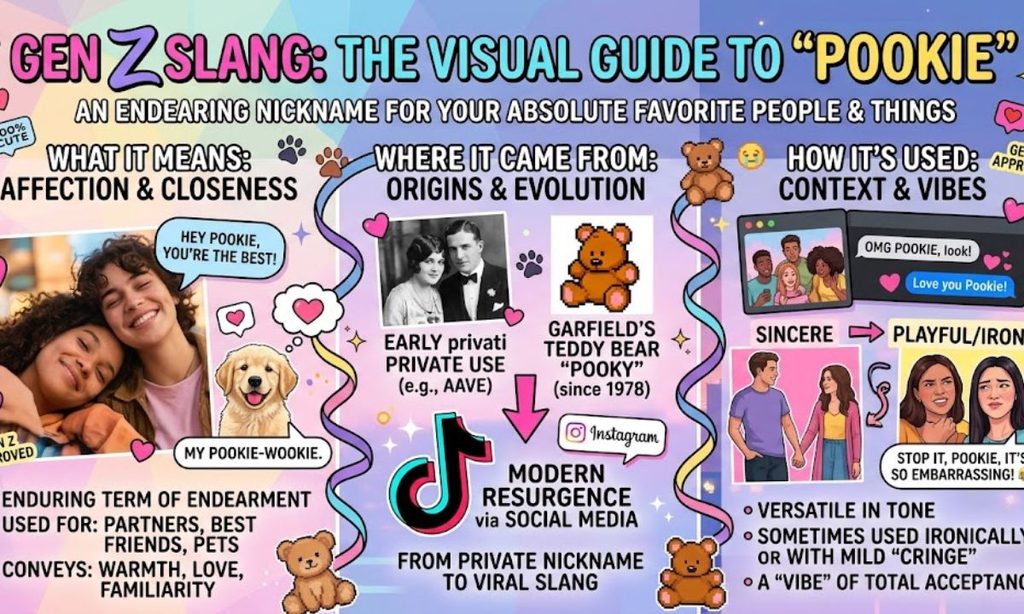
For Gen Z, pookie has become a go-to nickname that goes beyond romance. It is used for best friends, situationships, group chat members, and even strangers online in a joking way. Gen Z often uses it with irony or exaggerated sweetness, which is part of the appeal.
Common Gen Z uses include:
- Calling a close friend “pookie” as a bonding term
- Using it sarcastically to tease someone
- Referring to a favorite influencer or content creator as “pookie”
Pookie Meaning in Instagram
On Instagram, pookie usually shows up in captions, comments, and DMs as a soft, affectionate label. People tag partners or friends as their “pookie” in photo carousels, and it often signals a cute inside joke or genuine closeness between the poster and the tagged person.
Does Pookie Mean Fart?
This question comes up a lot, and the short answer is: not in English. There is a claim that the word also means “fart” in the Tulu language, an Indian language spoken in parts of Karnataka and Kerala. In everyday English slang, though, pookie carries none of that meaning — it is purely a term of affection.
Pookie Meaning from a Girl
When a girl calls someone pookie, it usually signals warmth, comfort, or playful affection. It can mean anything from “I think you’re cute” to “you’re one of my closest friends.” Tone and context matter here more than the word itself.
Pookie Meaning in Love
In a romantic context, pookie is a soft, sweet nickname similar to “babe” or “honey.” It suggests comfort, intimacy, and a relaxed, playful bond between partners rather than a formal or serious tone.
You”ll Love This :BBFS MEANING
How “Pookie” Is Used on Different Platforms
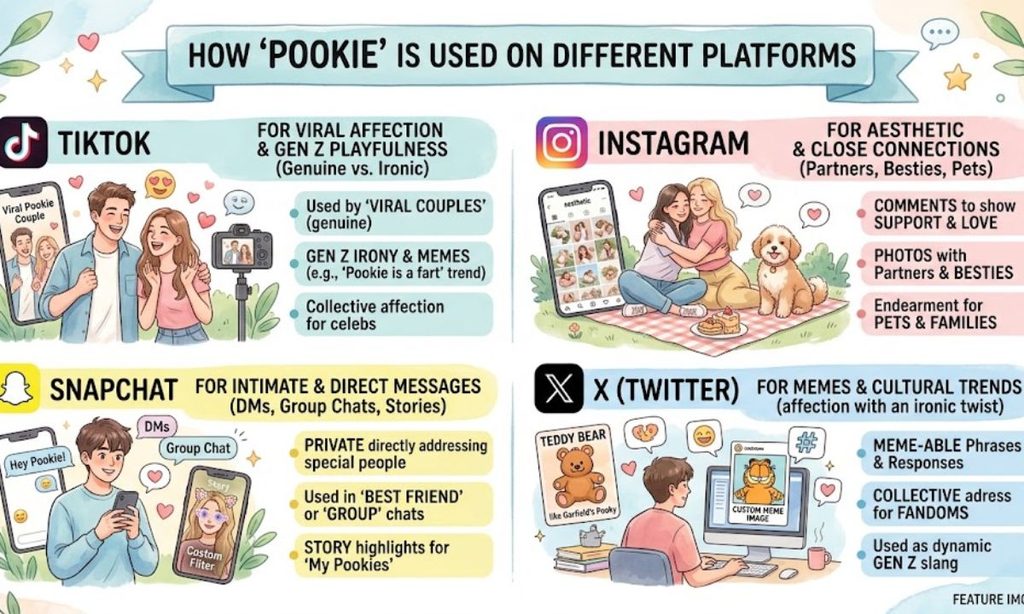
Different platforms give the word slightly different flavors:
- TikTok: Often used in captions, duets, or comments to express affection for a creator or trend
- Instagram: Common in couple posts, friend tags, and cute captions
- X (Twitter): Used more loosely, sometimes sarcastically, toward public figures or viral moments
- Texting apps: A private, personal nickname between close friends or partners
Pookie in Texting vs. Real Life
Texting and real-life use of pookie can feel quite different.
| Setting | How It’s Used | Tone |
| Texting | Frequent, casual, quick nickname | Light, playful, affectionate |
| In person | Less common, more intentional | Warm, sincere, sometimes teasing |
| Public posts | Used for effect or humor | Can be sarcastic or genuine |
In texting, pookie often replaces a person’s actual name entirely. In face-to-face conversation, it tends to carry more weight and is used more sparingly.
Examples of “Pookie” in Sentences
Here are a few natural examples of how the word fits into everyday conversation:
- “Good morning, pookie! Hope you slept well.”
- “My pookie just texted me the cutest good morning message.”
- “Stop being dramatic, pookie, it’s not that serious.”
- “She’s not just my friend, she’s my pookie.”
- “Pookie, can you grab coffee on your way over?”
Variations and Related Slang
Pookie has inspired a few playful spin-offs and sits alongside similar affectionate terms:
- Pookie bear
- an extra-sweet, exaggerated version of pookie
- Pooks
- a shortened, casual variant
- Pookster
- a playful nickname twist
- Related terms: babe, boo, bestie, honey, sweetie
Is “Pookie” Safe for Kids?
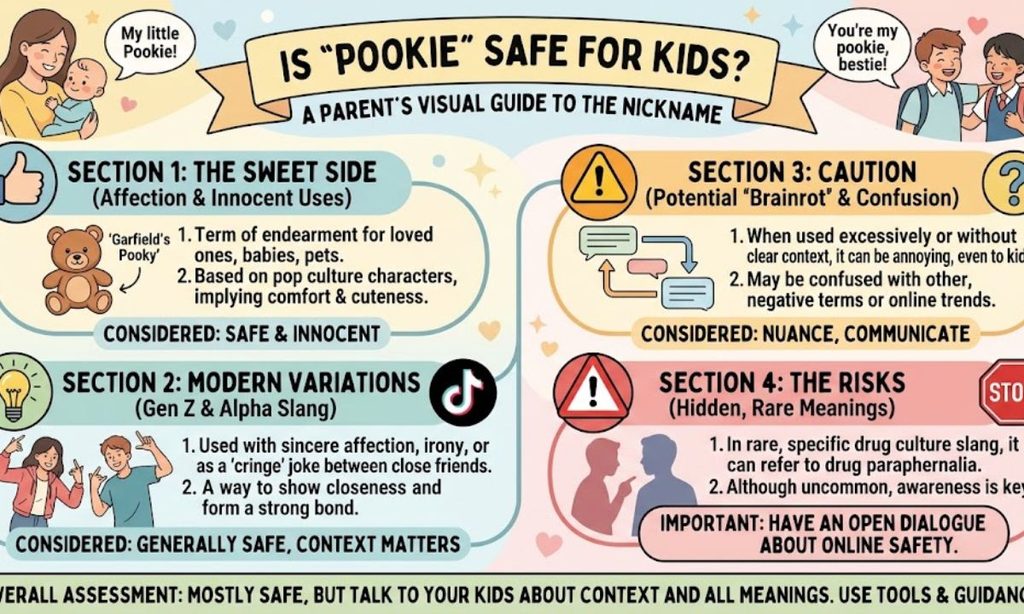
Generally, yes. Pookie is considered a harmless, affectionate nickname suitable for children, pets, and family members. It is a widely used slang term among teenagers that reflects affection, familiarity, and camaraderie rather than anything inappropriate. As with most slang, context and tone matter more than the word itself.
When to Use (and Avoid) “Pookie”
Good times to use it:
- With close friends who understand the tone
- With a romantic partner in casual, affectionate moments
- In light, playful online captions
Times to avoid it:
- In formal or professional settings
- With someone you don’t know well
- When the other person seems uncomfortable with nicknames
Frequently Asked Questions
What does pookie mean in slang?
Pookie is a slang term of endearment used for someone you love or feel close to, like a partner, friend, or pet.
Is pookie a compliment?
Yes, calling someone pookie is generally seen as a sweet, affectionate compliment.
Can you call a friend a pookie?
Yes, pookie is commonly used between close friends, not just romantic partners.
Where did the word pookie come from?
Its exact origin is debated, but theories point to German nicknames for children and Celtic folklore creatures.
Is pookie only used by Gen Z?
No, but Gen Z has significantly boosted its popularity through social media trends.
What is a pookie bear?
Pookie bear is a more exaggerated, extra-affectionate version of the nickname pookie.
Conclusion
Pookie has grown from an obscure, uncertain origin into one of today’s most recognizable terms of endearment. Whether it’s used for a romantic partner, a best friend, or even a beloved pet, the word carries warmth, familiarity, and a touch of playfulness. As social media continues to shape modern slang, pookie shows no signs of slowing down — and now you know exactly what it means and how to use it right.

1 thought on “What Does Pookie Mean? Meaning, Origin, Uses & Examples of the Sweet Nickname (2026)”